DHS Resurrects & Expands H-1B $100,000+ Fee Through Proposed Rulemaking
If Approved, Proposal Would Shift a Significant Part of Immigration System Costs to H-1B Employers
The Department of Homeland Security (DHS) has proposed a new $103,265 fee for every H-1B application subject to the annual “cap” lottery. If finalized, the fee would be payable when the petition is filed and would apply in addition to all existing H-1B filing fees and other required payments.
This is only a proposal, and the new fee is not yet required. DHS will likely seek to have the rule go into effect before next year’s H-1B cap lottery registration process, though court challenges are almost certain.
Who Has to Pay the Fee?
The fee would apply to all H-1B petitions subject to the annual H-1B cap and is not dependent on where the employee is located, whether in the U.S. at the time of applying or not. Any employer with an H-1B cap registration selected in the lottery for an employee would have to pay this fee when filing the H-1B petition.
Employers exempt from the lottery – including universities, affiliated nonprofits, and governmental and nonprofit research organizations – would not have to pay the fee. Cap-exempt H-1B applications, such as extensions or amendments, would also not be subject to the fee.
Why $103,265?
DHS states that the proposed fees will provide a revenue source to cover costs of the broader U.S. immigration system. It calculated the $103,265 fee by dividing $8.78 billion in identified government immigration system costs by an assumed 85,000 annual H-1B cap filings.
Only one-third of that revenue would remain with USCIS, with the rest allocated to other immigration-involved federal agencies such as ICE, CBP, DOL, DOS, and DOJ.
DHS acknowledges the $100,000+ fee carries consequences – the agency anticipates significant economic impact to over 11,000 small employers. Despite this impact, no discounts would be made available for those smaller, or other, employers.
Will the Rule Be Challenged in Court?
A final rule is almost certain to face legal challenges.
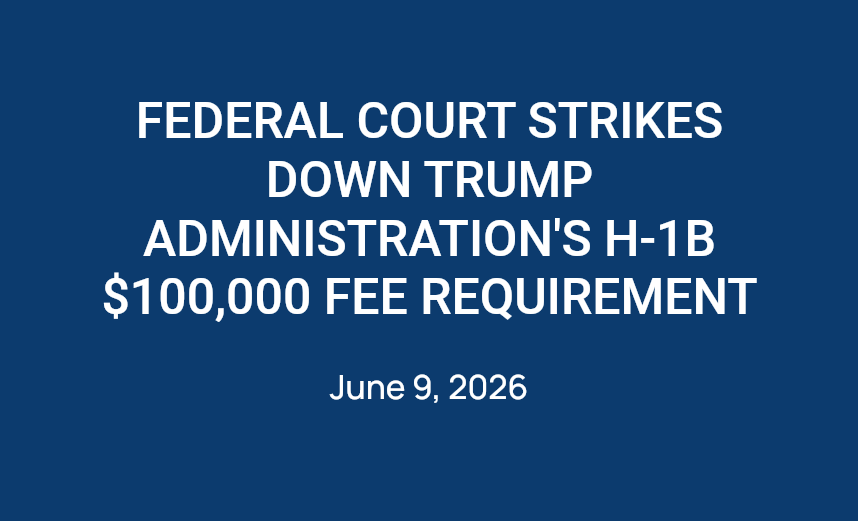
The proposal resembles the Trump administration’s $100,000 H-1B payment policy issued in 2025, which a federal court struck down in June 2026. This time, however, DHS is using formal rulemaking and different statutory authority to pursue the $100,000+ charge in the hopes of preventing successful court challenges. DHS asserts in the proposed rule that federal law permits recovery of the full costs of immigration adjudication and naturalization services, even across agencies.
Opponents of the proposal likely will argue the fee functions as a tax, exceeds DHS’s fee-setting authority, and improperly makes H-1B employers fund programs with little connection to their petitions.
What Should Employers Do Now?
- Plan ahead & assess business and budget impact – Evaluate employees needing H-1B cap sponsorship to identify which critical positions would remain viable, even with the new fee, and which require a new immigration strategy.
- Submit comments – The 30-day comment period gives employers an opportunity to document effects on hiring, unfilled roles, offshoring, small businesses, and workforce planning.
- Monitor for updates – Silberman Law will closely monitor and report on developments related to the proposal, public comments, potential litigation, and any final agency action.
* * * *
If you have questions about this Alert or would like assistance evaluating its potential impact on workforce planning or immigration strategy, please contact the Silberman Law legal professional with whom you work, or simply reply to this Alert.